Default to AI or Die?
Yesterday at an event in Paris with Varun Anand from Clay and Gabriel Hubert from Dust, it had that same energy you feel at any tech gathering today - everyone talking about AI, racing to integrate it, convinced they need to be "AI-first" or get left behind.
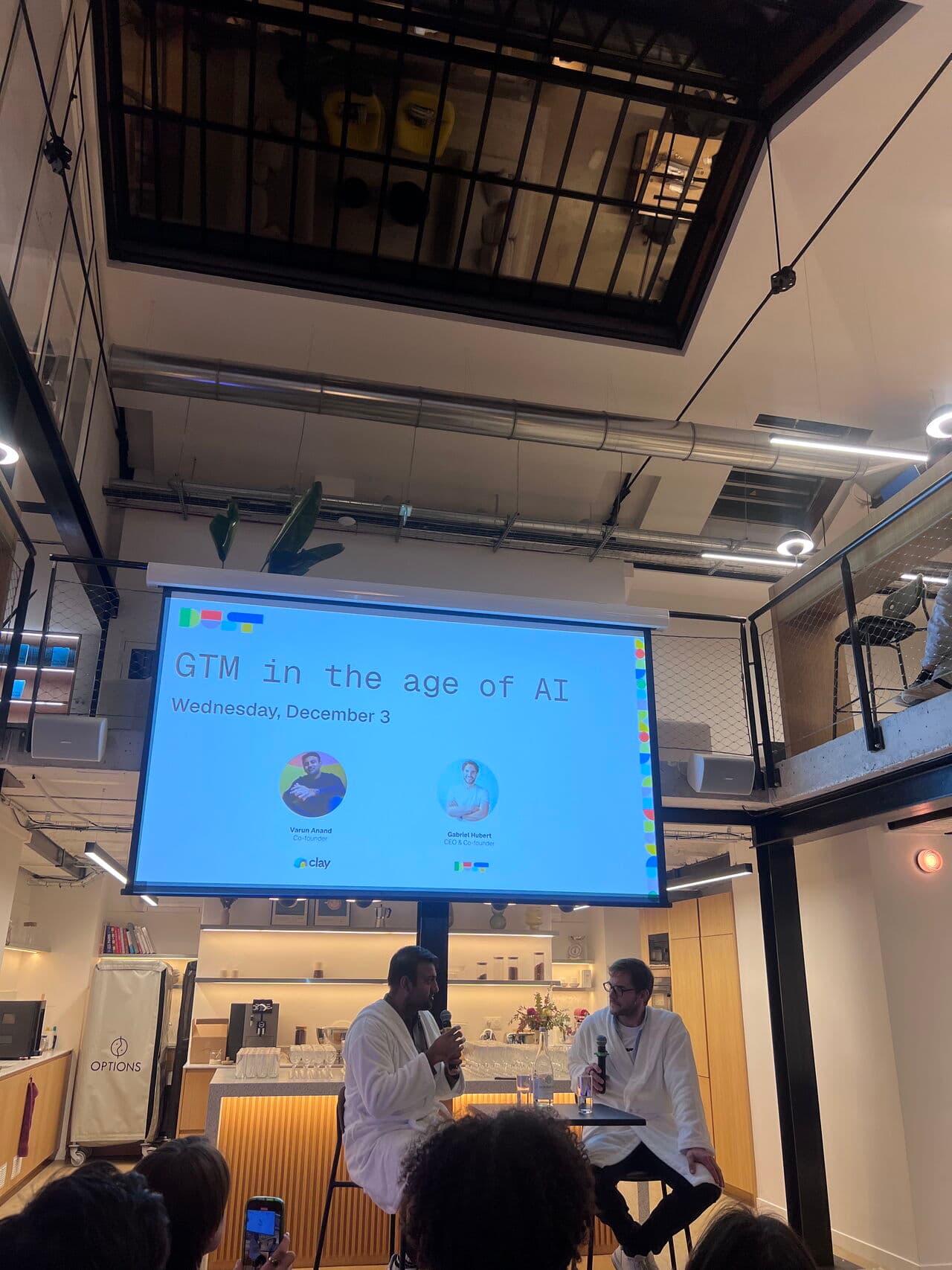
But a couple of things said in that room stuck with me.
Gabriel mentioned that some companies already work without all the noise – no politics, no wasted time, just focus on the core product and who it's for. Those companies exist right now, in the same city as companies where people spend weeks on PowerPoint decks just to get their boss to notice their work.
AI won't create that better company. It'll just make it obvious which one you are.
Then Varun said something that surprised me: Clay tells their marketing team not to use AI for copywriting. His reasoning was simple. Language models synthesize and give you average output. Marketing is supposed to make you stand out, not blend in.
That's when something clicked for me about what's happening right now:
We're automating away understanding before we've actually built it.
Companies automate support tickets, deflect 90% of them, and celebrate the efficiency win. Three months later, their product is worse because nobody felt the pain signals anymore.
Same thing in sales. AI SDR tools send hundreds of personalized emails. Volume goes up. But nobody remembers the actual conversation. Nobody understands why this specific person cares.
But it doesn't have to work that way. Dust uses AI to catch product feedback from meeting notes and route it directly to product teams - creating a continuous loop instead of cutting one off. Same technology, opposite philosophy.
The difference? One uses AI to avoid hearing from customers. The other uses it to hear them better.
Gabriel was right: understanding the customer's mindset matters more than ever. The vanity metrics - number of calls, emails sent, CRM updates - are dying. All the activity that made people look busy is going away. What's left is the only thing that mattered: do you actually understand what your customer needs?
The companies that win won't be the ones that adopted AI fastest.
They'll be the ones that used it to understand their customers better while everyone else was using it to avoid them.